CREDIT CARD GAMES / A NEW PUBLIC ARCADE
Money becomes a multiplayer medium.
What if checkout did not end the experience? What if five dollars lit a window, planted a garden, opened a seat, added a note, or kept a public performance alive?

A payment should make the room move.
The internet has made payment nearly frictionless and emotionally invisible. We tap, authorize, receive a receipt, and disappear. Credit Card Games starts with a stranger proposition: the contribution is the move.
A player puts in a small, clearly priced amount. The payment does not vanish behind a confirmation screen. It changes a shared public world. A window comes on. A chair unfolds. A flower opens. A band gains another minute. Everybody watching sees it happen at the same time.
This is neither a casino nor a prettier donation form. There is no financial prize, chance mechanic, mystery box, or whale who gets to erase the crowd. It is a category between multiplayer play, crowdfunding, public art, and creator software: a place where many modest acts accumulate into one extraordinary event.
LIGHT THE BLOCK / NON-PAYMENT PREVIEW
One hundred dark rooms. One public outcome.
In the live game, each confirmed $5 move would light one window and attach a three-word dedication. The final window unlocks a commissioned performance, dinner, print run, or public object announced before play begins.
Preview only. No card form, charge, or stored payment information.
EVERYONE PUTS IN
Eight ways a contribution can behave.
The game is not the cause pasted onto the page. The game is the exact relationship between a confirmed contribution, a visible public change, and a promised outcome.
Light the Block
Every move illuminates one room. Complete the building to begin the performance.
Emotion: anticipationKeep It Alive
Each move adds time and a sound layer. If the pulse reaches zero, the session closes forever.
Emotion: collective rescueThe Long Table
Each move adds an equal seat and answer. At the target, the pool produces a real shared meal.
Emotion: belongingChoose the Weather
Sun, rain, fog, and wind reshape one artwork. The final atmosphere directs its release.
Emotion: playful allegianceOne Hundred Hands
Each contributor makes one bounded gesture. The finished work needs all one hundred.
Emotion: authorshipBuild a Fire
Wood, flame, chairs, songs, food, and stories arrive in order until the commons is ready.
Emotion: warmthPass the Light
One contribution makes a move and prepays a bounded free move for the next visitor.
Emotion: generosityThe Last Move Starts the Show
Assemble a stage piece by piece. The final move reveals the release to every contributor.
Emotion: suspense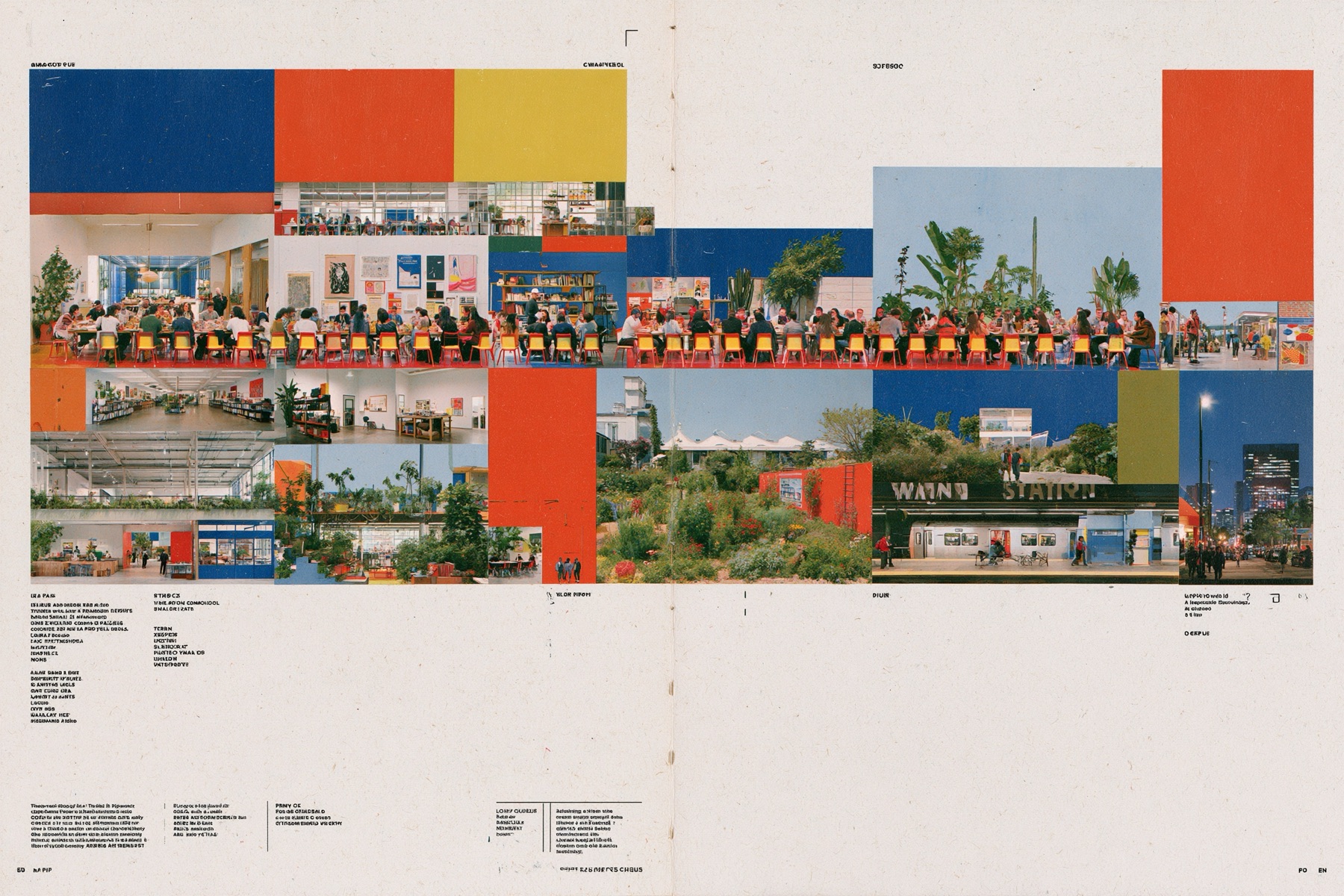
THE CONTRIBUTION CONTRACT
Wonder needs a boring, legible ledger.
Before a card appears, every game states the move, amount, target, beneficiary, deadline, outcome, and what happens if the target is missed. “Contribution” is never used as camouflage: if it is a purchase, creator payment, pre-order, or participation fee, the game says so.
The exact public state that changes.
The price, fees, and tax treatment.
Confirmed moves or contribution volume required.
The specific real thing that completion unlocks.
Who receives money and in what capacity.
Refund, extension, scaled result, or named alternative.
THE PLATFORM THESIS
The billion-dollar version is not one hit game.
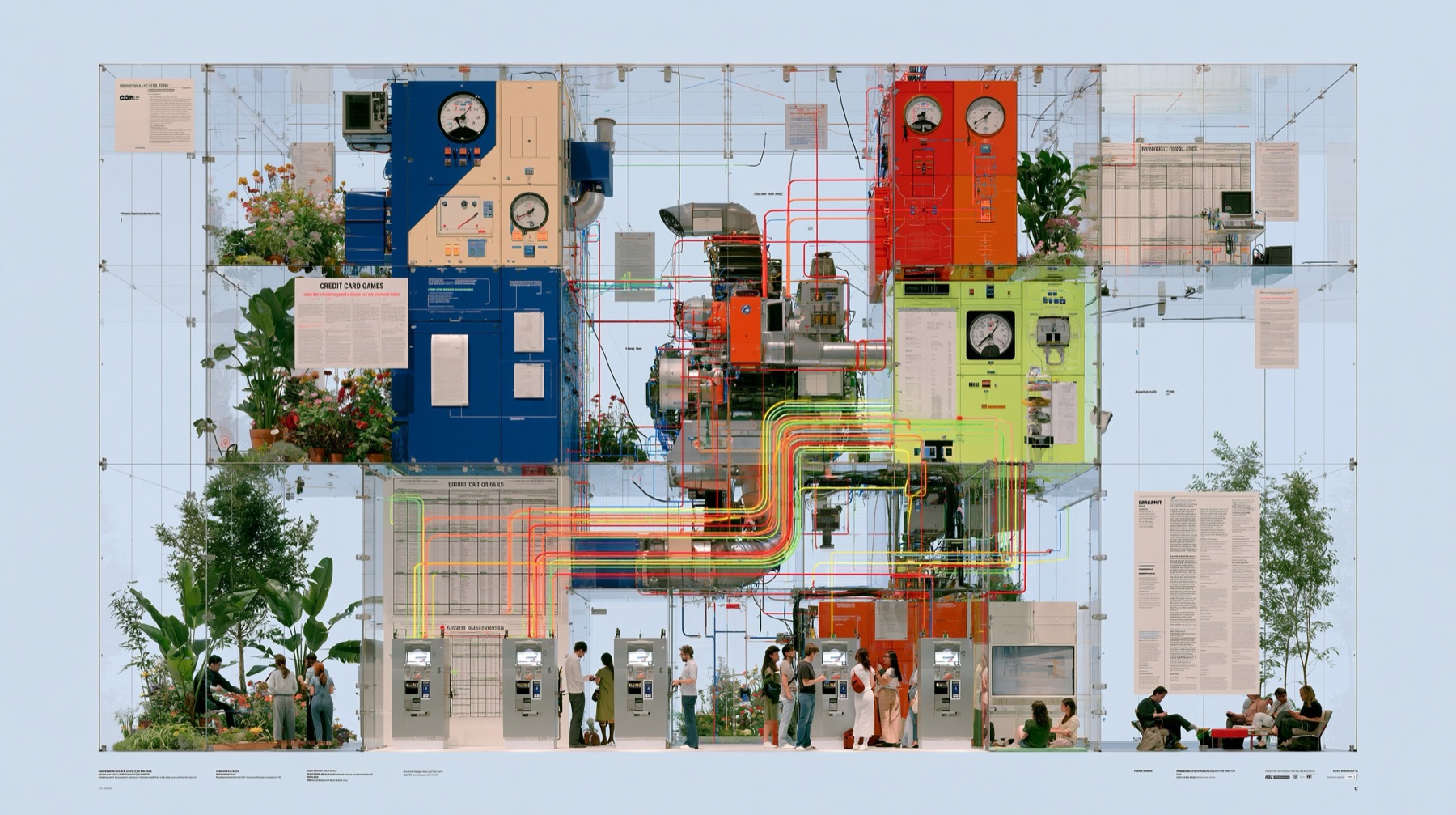
It is a system that lets thousands of artists, schools, venues, neighborhoods, publishers, musicians, organizers, and brands build their own contribution worlds. Credit Card Games supplies the live state, templates, receipts, payment-confirmation logic, fulfillment record, and beautiful public ending.
Crowdfunding taught people to back an outcome with a card. Multiplayer games taught them to expect a world to respond immediately. Creator software taught them to build without a platform engineer. Credit Card Games is where those expectations meet.
The moat is not card processing. It is the library of proven contribution mechanics, the public history of completed outcomes, and the distribution loop created when every player leaves with a beautiful receipt of the move they made.
THE BILLION DOLLAR MODELER
Make the claim answer to the drivers.
Default case: 40,000 organizers each run five games a year, with $5,000 flowing through an average game. That is $1B in annual contribution volume—not $1B extracted from contributors.
200,000 games per year
Scenario model, not a forecast or investment valuation. The multiple is an explicit assumption; payment-processing expense, taxes, refunds, chargebacks, revenue share, and operating costs are not modeled here.
ONE WINDOW TO ONE BILLION
Four proofs, in order.
-
PROOF 01 / $5K–$100K VOLUME
Can one room feel electric?
Ship Light the Block. Prove strangers understand it, contribute, stay to watch, share their room, and trust the final receipt. The first goal is not scale. It is a finished night people describe to someone else.
-
PROOF 02 / $1M–$10M VOLUME
Can creators make their own worlds?
Productize four mechanics: finite build, time extension, collective authorship, and shared unlock. Charge for Studio only after organizers repeat without a custom production team.
-
PROOF 03 / $10M–$100M VOLUME
Can trust become distribution?
Publish outcome receipts, fulfillment histories, contribution contracts, and reusable identities. Let a player in one finished game discover the next game from someone they already helped.
-
PROOF 04 / $100M–$1B VOLUME
Can the format become infrastructure?
Expand through cultural institutions, schools, cities, publishers, global creator networks, and carefully chosen brands. Local visual worlds stay different; the ledger, templates, safety limits, and completion receipts become the platform.
NON-NEGOTIABLES
Scale the invitation, not the extraction.
- One confirmed contribution creates one disclosed move.
- No random financial prize or pay-to-win dominance.
- Anonymous participation remains beautiful and complete.
- Raw card details stay with the payment provider.
- Refunded and disputed funds remain distinct from confirmed moves.
- Every promised outcome receives a public completion receipt.